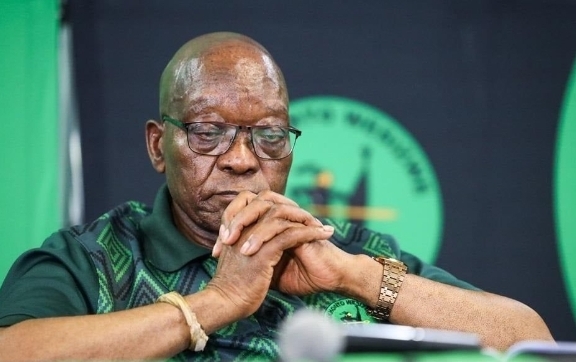
Jacob Zuma, the former President of South Africa and once a dominant figure in the African National Congress (ANC), has now officially been removed from the party. This development follows a recent decision by the ANC’s National Disciplinary Committee of Appeal, which reviewed and ultimately upheld an earlier ruling made by the party’s disciplinary committee to expel Zuma. The expulsion, a decision not taken lightly, effectively severs his long-standing ties with the political organization he not only served for decades but also once led with great influence and authority.
The matter began with disciplinary proceedings initiated against Zuma, stemming from alleged violations of party rules and principles. After a thorough investigation and deliberation, the ANC’s disciplinary committee concluded that his actions were in breach of the party’s code of conduct, warranting expulsion. Zuma, however, chose to contest the decision, exercising his right to appeal the ruling through the party’s internal mechanisms. The case was subsequently referred to the National Disciplinary Committee of Appeal, which acts as the highest authority in resolving such internal disputes.
Following a detailed examination of the facts and circumstances surrounding the case, the appeal committee affirmed the findings of the initial disciplinary body. It concluded that there were no grounds to overturn the original decision, thereby finalizing Zuma’s removal from the party. This marks a significant moment in South African politics, as it officially ends Zuma’s formal association with the ANC, an organization that played a central role in his rise to political prominence.
For decades, Zuma was a key figure within the ANC, serving in various capacities, including as its leader. His tenure as President of South Africa was marked by both achievements and controversies, with a legacy that continues to divide public opinion. However, this expulsion represents a dramatic shift, highlighting the ANC’s commitment to enforcing discipline within its ranks, even when it involves one of its most prominent former leaders.
The decision to uphold Zuma’s expulsion is expected to have wide-ranging implications. Politically, it signals a firm stance by the ANC against actions or behaviors perceived as contrary to its values, regardless of the individual’s stature or historical contributions. For Zuma himself, the expulsion marks a profound personal and political setback, raising questions about his next steps and his role, if any, in South Africa’s political future.
Observers and analysts are closely watching the aftermath of this decision, as it could reshape dynamics within the ANC and influence the broader political landscape of the country. Whether Zuma will seek an alternative platform for his political aspirations or retreat from public life remains to be seen. What is clear, however, is that his formal association with the ANC, which has been a defining aspect of his career, has come to an unequivocal end.