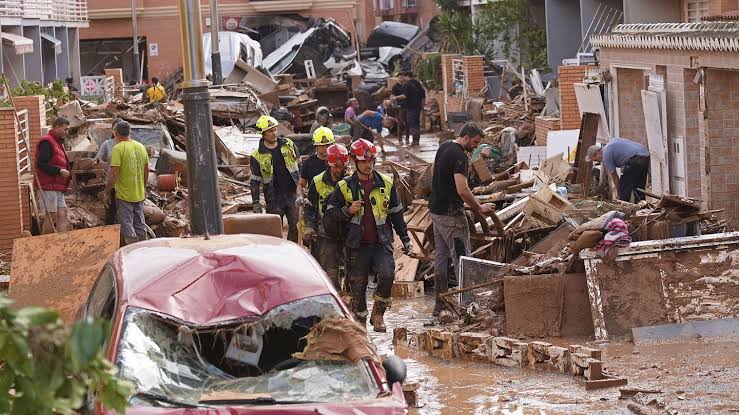
Spain is facing the arduous task of rebuilding after catastrophic floods swept through several regions, leaving communities devastated and infrastructure in ruins. The unprecedented rainfall caused widespread destruction, forcing thousands of residents to evacuate and disrupting countless lives. As emergency response efforts continue, the focus is gradually shifting toward long-term recovery, with authorities and aid organizations working together to restore normalcy.
The heavy rains that triggered the flooding overwhelmed rivers and drainage systems, leading to the inundation of homes, businesses, and farmland. Entire neighborhoods were submerged, cutting off access to basic services and isolating many communities. Roads, bridges, and utility systems sustained extensive damage, leaving some areas without electricity or clean water. Emergency crews have been working tirelessly to rescue stranded individuals, deliver supplies to hard-hit areas, and provide temporary shelter to those displaced by the disaster.
Addressing the immediate needs of affected residents has been a top priority. Temporary shelters have been established to provide food, water, and medical care for displaced families. Humanitarian organizations, both local and international, have mobilized resources to support these efforts. However, the magnitude of the disaster has strained available resources, highlighting the need for continued aid and collaboration to meet the ongoing challenges.
As the immediate crisis begins to subside, efforts are now turning toward recovery and rebuilding. Repairing critical infrastructure, such as roads, bridges, and power lines, is essential to reconnecting isolated areas and enabling the return of normal life. Farmers and small business owners, many of whom have seen their livelihoods destroyed, are seeking financial assistance to rebuild. The agricultural sector has been particularly hard-hit, with flooded fields and damaged crops posing long-term economic challenges for rural communities.
Environmental recovery is another pressing concern. The floods have caused significant ecological damage, spreading debris, pollutants, and sediment into rivers and coastal waters. Efforts are underway to clean up the affected areas, restore damaged ecosystems, and implement measures to prevent similar disasters in the future. Environmental experts are also advocating for investment in resilient infrastructure and improved water management systems to mitigate the risks of future flooding events.
The Spanish government has pledged substantial financial aid to support recovery efforts, including assistance for displaced residents, infrastructure repairs, and compensation for losses. Additionally, the European Union has activated disaster relief mechanisms to provide further financial and logistical support. These resources will be critical for rebuilding efforts and ensuring that affected communities receive the help they need.
One of the most heartening aspects of the recovery process has been the solidarity displayed by communities across Spain. Volunteers have come forward in large numbers to assist with cleanup efforts, provide supplies, and offer emotional support to those affected. This collective spirit of compassion and resilience has played a vital role in uplifting communities during this difficult time.
The disaster has also brought renewed attention to the growing challenges posed by climate change. Experts warn that extreme weather events like these floods are becoming more frequent and severe, underscoring the need for proactive measures. Investments in flood defenses, early warning systems, and climate-resilient infrastructure are essential to protecting vulnerable regions from future catastrophes.
The road to recovery will undoubtedly be long and challenging, but Spain’s communities have shown remarkable strength and determination. Efforts are not only focused on rebuilding what was lost but also on creating a more sustainable and resilient future. By addressing both the immediate and long-term needs of affected regions, authorities and residents are paving the way for recovery and renewal.
These floods have left a profound impact, serving as both a reminder of nature’s unpredictability and a call to action for greater preparedness. As Spain works to heal and rebuild, there is hope that the resilience demonstrated by its people will help these communities emerge stronger and better equipped to face future challenges.