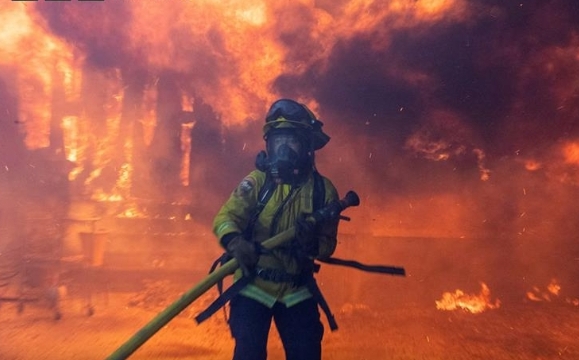
The wildfire crisis in Los Angeles has reached an unprecedented level, with the Pacific Palisades blaze now officially recognized as the most destructive in the city’s history. Firefighters are struggling to combat the inferno, which has already scorched over 17,000 acres, due to rapidly dwindling water supplies. This shortage is severely hampering containment efforts, leaving the fire to spread uncontrollably across neighborhoods.
The Pacific Palisades fire has forced the evacuation of over 130,000 residents, with many fleeing their homes in a state of panic. Entire communities have been reduced to ash, and emergency shelters are overflowing with displaced individuals. The situation is dire, as firefighting teams report that resources are stretched to their limits. The lack of water, combined with dry conditions and strong winds, has created a perfect storm for disaster.
Fire officials are describing the fire’s behavior as erratic and aggressive, making it difficult to predict its path. Despite the deployment of thousands of firefighters and aerial support, progress in containing the flames has been minimal. The water shortage has become a critical issue, forcing crews to prioritize certain areas over others, often leaving less populated regions vulnerable to destruction.
This wildfire has already claimed lives and caused numerous injuries, though the full extent of the casualties is still being assessed. Many residents are left wondering how such a catastrophic situation was allowed to unfold, with some pointing to the region’s ongoing drought and climate change as key factors. The dry weather, coupled with rising temperatures, has created an environment ripe for wildfires.
The Pacific Palisades fire is part of a broader crisis, as multiple blazes continue to burn across Los Angeles County. The Sunset Fire in Hollywood Hills is another major concern, with its proximity to densely populated areas and celebrity homes drawing significant attention. However, it is the scale and destruction of the Palisades fire that has captured the nation’s focus.
Investigators are still working to determine the cause of the fire, with preliminary reports suggesting the possibility of human activity or downed power lines. Regardless of the origins, the immediate priority remains containment, though the lack of water poses a significant challenge. The situation is compounded by the city’s aging infrastructure, which has struggled to meet the demands of firefighting efforts.
Residents in affected areas are being urged to follow evacuation orders without delay. Officials are emphasizing that compliance with these directives is essential for ensuring public safety. Those who remain in their homes risk being trapped as the fire rapidly approaches, with limited resources available to conduct rescues.
The destruction caused by the fire is staggering, with entire neighborhoods wiped out. Homes, schools, businesses, and natural landscapes have been consumed by the flames, leaving a trail of devastation in their wake. The loss of vegetation increases the risk of landslides during future rainstorms, further compounding the disaster’s impact.
Relief efforts are underway, but the scale of the disaster has overwhelmed local resources. State and federal agencies are stepping in to provide additional support, but recovery is expected to take years. The emotional toll on displaced residents is immense, as many have lost not only their homes but also irreplaceable personal belongings and a sense of security.
The crisis has also reignited conversations about climate change and the need for better wildfire prevention strategies. Experts warn that as global temperatures rise, events like this will become more frequent and severe. This has prompted calls for greater investment in fire-resistant infrastructure, improved water management, and increased funding for emergency services.
As the Pacific Palisades fire continues to burn, Los Angeles faces one of its darkest chapters. Firefighters remain on the frontlines, battling against overwhelming odds, while residents and officials alike grapple with the devastating consequences. The road to recovery will be long and challenging, but the resilience of the community offers a glimmer of hope amid the destruction.
“Firefighters Face Water Shortages as Pacific Palisades Becomes Most Destructive Wildfire in Los Angeles History”
Date: