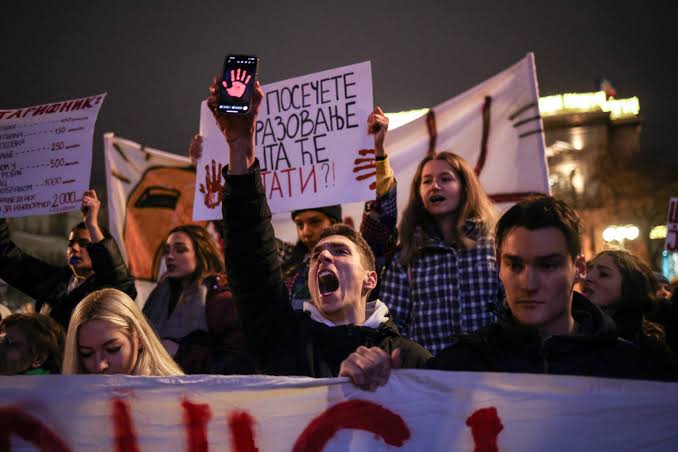
Following the devastating disaster at Novi Sad railway station, tens of thousands of protesters gathered in Belgrade to voice their outrage against the government. The tragedy, which resulted in significant casualties, has sparked nationwide grief and anger, with many citizens blaming the authorities for negligence and mismanagement. The massive protest in the capital city marks a powerful response to the catastrophe, as people from all walks of life demand accountability and meaningful reforms to prevent future disasters.
The protest, one of the largest in Serbia in recent years, attracted a diverse crowd of participants. Citizens of all ages, including students, workers, and families, marched through the streets of Belgrade to express their frustration with the government’s failure to ensure the safety of its citizens. Protesters carried signs that read “Enough is enough,” “We demand justice,” and “Government out,” reflecting their desire for change. The demonstrators are not only calling for justice for the victims of the Novi Sad disaster but also for a wider overhaul of the government’s approach to infrastructure, safety, and public services.
While details of the Novi Sad railway station disaster are still emerging, preliminary reports suggest that outdated infrastructure and a lack of proper safety protocols may have played a role in the incident. These factors, along with a history of government inaction, have fueled the public’s anger. Critics argue that the tragedy is just the latest example of a long-standing pattern of neglect in Serbia’s public sector. In response, many have pointed to years of corruption, inefficiency, and a lack of political will as the root causes of the disaster and the systemic issues plaguing the country.
For many protesters, the tragedy at the railway station was a tipping point. Over the years, dissatisfaction with the government has been building, particularly among those who feel that their voices are not being heard. The protest has become a platform for expressing frustration not only with the specific incident but with a wide range of issues affecting the country. These include economic inequality, high unemployment, limited political freedoms, and a perceived culture of impunity among government officials.
As the protest unfolded, demonstrators gathered outside key government buildings, demanding that those responsible for the disaster be held accountable. Opposition leaders took to the stage, addressing the crowd with impassioned speeches calling for immediate action. “The loss of lives in Novi Sad was preventable,” one leader declared. “We cannot allow this government to continue neglecting the safety of its people.”
The government has promised a thorough investigation into the disaster and has pledged to hold those responsible accountable. Officials have emphasized the importance of identifying the root causes of the tragedy and implementing measures to ensure such an incident never happens again. However, many protesters are skeptical of the government’s response, demanding that concrete actions be taken rather than vague assurances. The public’s trust in the authorities has been eroded over time, and they are now calling for systemic changes to ensure that the government prioritizes the well-being of its citizens.
The protests in Belgrade have raised questions about the future of Serbia’s political landscape. The scale and intensity of the demonstrations suggest that the public’s frustration with the current administration has reached a boiling point. Observers believe that these protests could mark a turning point in Serbian politics, with widespread calls for greater accountability, transparency, and reform.
In the coming days, organizers have promised that protests will continue until the government takes meaningful action. The tragedy at Novi Sad and the subsequent unrest have shone a spotlight on the need for change in Serbia. The growing discontent in Belgrade and across the country may force the government to confront the deep-rooted issues that have contributed to the nation’s ongoing political and social struggles.
International observers have also expressed concern about the situation in Serbia, with human rights organizations and global leaders calling on the government to address the public’s grievances and ensure justice for the victims of the Novi Sad disaster. The events in Belgrade have captured the attention of the world, and the outcome of these protests may have significant implications for the country’s political future.