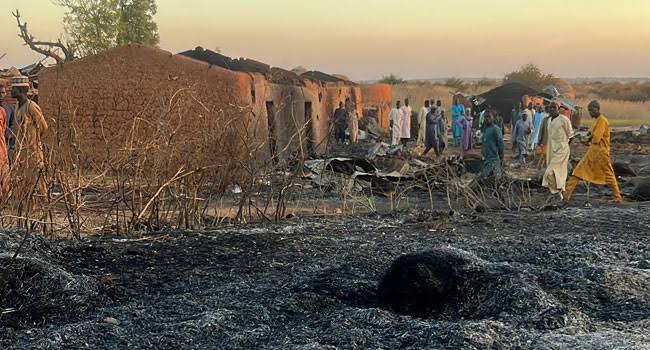
A tragic airstrike targeting the logistics base of the Lakurawa insurgent group in Sokoto State on Christmas Day mistakenly claimed the lives of at least 10 civilians. The Nigerian military attributed the civilian casualties to “secondary explosions” following the initial strike, which had been aimed at disrupting insurgent activities in the region. This incident has raised concerns about the risks of military operations in populated areas and the need for greater protection of civilians during counterinsurgency efforts.
The Incident
On Christmas Day, an airstrike was carried out by the Nigerian military on a suspected insurgent logistics base in Sokoto State, which is believed to be a hub for the Lakurawa insurgent group. This group has been involved in numerous attacks in the region, and the Nigerian military had been targeting it as part of ongoing operations to combat insurgency.
However, in the aftermath of the attack, at least 10 civilians were reported dead, with several others injured. The military has explained that the deaths were the result of “secondary explosions,” which are typically caused by the detonation of explosives or stored materials at the target site. It is believed that the insurgents had stored such materials at their base, leading to the catastrophic aftermath.
Residents in the area have described the horror they witnessed following the explosions, with many homes and structures being destroyed. Locals also reported a sense of disbelief, as the airstrike had been intended to strike a militant target but instead caused significant civilian harm.
Military’s Statement
In response to the tragedy, the Nigerian military expressed deep regret and extended condolences to the families of the victims. A spokesperson for the military explained that while the airstrike was aimed at neutralizing insurgents, the secondary explosions caused by the presence of explosive materials led to the loss of innocent lives.
“We are deeply sorry for the unintended loss of civilian lives during this operation. Our forces are committed to minimizing harm to non-combatants, but the unpredictable nature of secondary explosions is a known risk in operations of this type,” the statement read.
The military also pledged to launch an investigation into the incident and reassured the public that measures would be put in place to ensure that such mistakes do not occur in the future.
Local Reaction
The civilian deaths have sparked outrage and sorrow in the local community, which had hoped for a peaceful holiday season. The news of the casualties, many of whom were reportedly women and children, has sent shockwaves through Sokoto State.
Community leaders and residents have called for accountability and justice for the victims. Local representatives have demanded that the government conduct a thorough investigation into the incident and provide adequate compensation to the families of those killed.
“This is a devastating tragedy. We understand that the military is working to protect us from insurgents, but innocent lives cannot be lost in the process. We demand a full inquiry into how this could happen,” said a Sokoto community leader.
Broader Concerns and Implications
This incident highlights the significant challenges of conducting military operations in densely populated areas. While airstrikes can be an effective tool for targeting insurgent groups, they carry a substantial risk of collateral damage, especially when explosive materials are present at the target site.
The deaths of innocent civilians are a painful reminder of the unintended consequences that often accompany military operations. As the conflict with insurgent groups continues in various parts of Nigeria, it is crucial for the military to develop and implement more precise targeting methods and conduct thorough intelligence assessments to minimize the risk to civilian lives.
The incident also serves as a reminder of the delicate balance that must be struck between counterinsurgency efforts and the protection of civilians. The Nigerian government must ensure that its operations prioritize the safety and well-being of non-combatants, particularly in areas where insurgents may be hiding among civilian populations.
Calls for Accountability and Change
Human rights organizations and international observers have strongly condemned the loss of civilian lives and called for a reevaluation of the military’s tactics. “This tragic event underscores the need for greater accountability and the use of strategies that prioritize civilian safety. The government must ensure that its operations do not result in the harm of innocent people,” said a representative of a global human rights organization.
As the government grapples with the fallout from the Christmas Day airstrike, it must take the opportunity to reassess its counterinsurgency strategy, ensuring that greater care is taken to protect vulnerable communities while still pursuing its mission to neutralize militants.
Moving Forward
While Operation Delta Sanity and other military initiatives continue to play a central role in combating insurgency in Nigeria, the Sokoto airstrike tragedy calls attention to the urgent need for a more civilian-centered approach.
The Nigerian military must continue to refine its tactics and operational planning, emphasizing the use of precision targeting and advanced intelligence to reduce the risk of civilian casualties. At the same time, the government must invest in building stronger relations with local communities, addressing their grievances, and providing assistance to those who have been affected by the conflict.
For the families of the victims, this Christmas Day will forever remain a painful reminder of the tragic consequences of warfare. The government’s ability to respond with empathy and accountability will play a crucial role in healing the wounds of this devastating incident.
Tragedy Strikes: Nigerian Airstrike on Insurgent Base Kills 10 Civilians in Sokoto State
Date: